
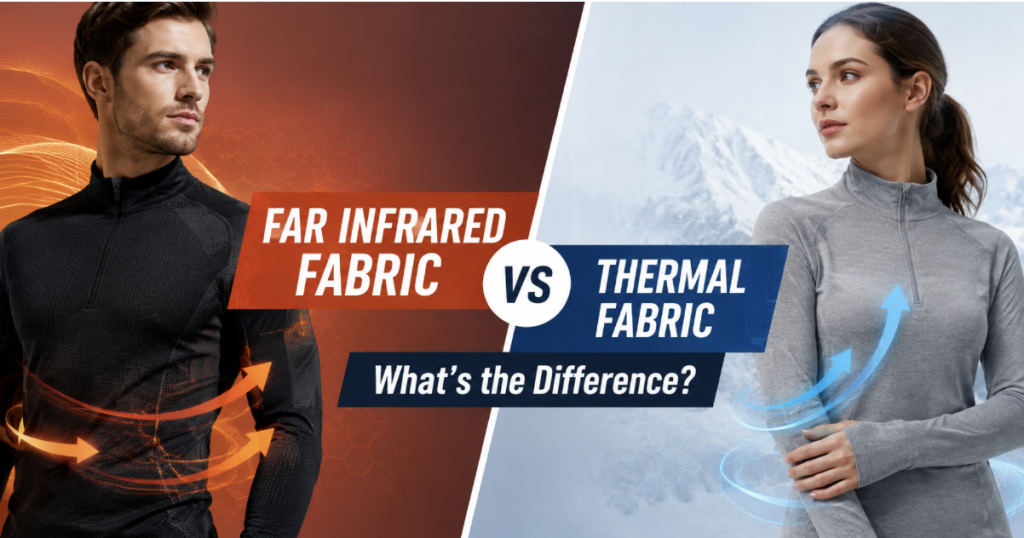
As functional textiles evolve, brands are seeking fabrics that offer more than basic warmth. Far infrared fabric and traditional thermal fabric are widely used in apparel, outdoor gear, and performance wear, but they work differently. Thermal fabrics mainly retain body heat through insulation, while far infrared fabrics use FIR-active materials to absorb thermal energy and emit far infrared radiation. Understanding these differences helps apparel brands, product developers, and textile buyers choose the most suitable fabric for specific performance needs.
What Is Far Infrared Fabric?
Far infrared fabric is a functional textile made with FIR-active materials that absorb thermal energy and emit far infrared radiation. These materials can be integrated into fibers, yarns, or finishes. Unlike traditional thermal fabrics that mainly rely on insulation, FIR fabrics add functional performance directly to the textile. Final performance depends on fiber composition, fabric structure, GSM, breathability, stretch, moisture management, and finishing methods.
How Does Far Infrared Fabric Work?
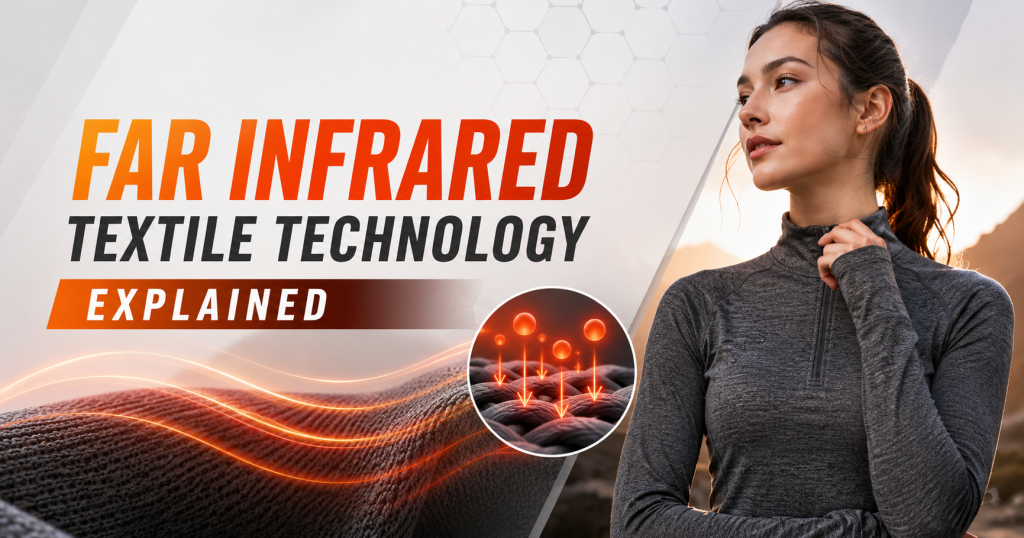
Far infrared fabric works by interacting with thermal energy through FIR-active materials incorporated into the textile. The process can be explained in three steps.
1. Thermal Energy Is Absorbed
The human body naturally releases heat. FIR-active materials in the fabric absorb part of this thermal energy from the body and surrounding environment.
2. FIR-Active Materials Interact With Energy
Minerals, ceramic particles, or other functional components within the textile interact with the absorbed thermal energy.
3. Far Infrared Energy Is Emitted
Part of the absorbed energy is re-emitted as far infrared radiation, supporting thermal comfort without requiring an electrical heating source.
Does far infrared fabric generate heat? Not in the same way as battery-powered heated clothing. It primarily interacts with existing thermal energy. For textile developers, FIR performance should be evaluated together with fabric construction, fiber composition, breathability, weight, and overall thermal properties.
Far Infrared Textile Technology Explained
Far infrared functionality can be incorporated into textiles through several manufacturing methods, each affecting durability, wash resistance, breathability, and overall fabric performance.
Fiber-Integrated FIR Technology
FIR-active minerals or ceramic particles are added during fiber production. Because the functional materials are embedded within the fiber, this method can provide durable performance and better resistance to repeated washing.
Yarn-Based FIR Technology
FIR-active materials can also be incorporated into or combined with yarns before knitting or weaving, allowing manufacturers to develop different fabric structures while maintaining functional properties.
FIR Coating or Finishing
FIR-active materials may be applied to the fabric surface during finishing. This method offers flexibility across different fabric types, although durability depends on the coating chemistry and application process.
For B2B buyers, understanding how far infrared fabric is manufactured is essential when evaluating performance, durability, and suitability for specific applications.
Far Infrared Fabric vs Thermal Fabric: What’s the Difference?
The main difference between far infrared fabric and thermal fabric is heat management. Thermal fabrics retain warmth through insulation, while far infrared fabric absorbs thermal energy and emits infrared radiation.
Feature | Far Infrared Fabric | Traditional Thermal Fabric |
Main Function | Thermal-energy interaction and FIR emission | Thermal insulation |
How It Works | Uses FIR-active materials | Reduces heat loss by trapping air |
Technology | Minerals, ceramics, functional fibers or finishes | Fiber structure, loft and thickness |
Fabric Construction | Can be engineered into lightweight fabrics | Often relies more heavily on insulating structures |
Breathability | Depends on textile construction | Depends on thickness and construction |
Common Uses | Activewear, base layers, recovery apparel, bedding | Fleece, jackets, winter apparel |
Neither technology is inherently better. The right choice depends on application and performance needs. In some products, far infrared technology and thermal insulation can be combined for enhanced comfort and functionality.
Explore More:Why Do Clothes Feel Sticky in Summer? How Cooling Fabric Helps You Stay Cool and Dry
Where Is Far Infrared Fabric Used?
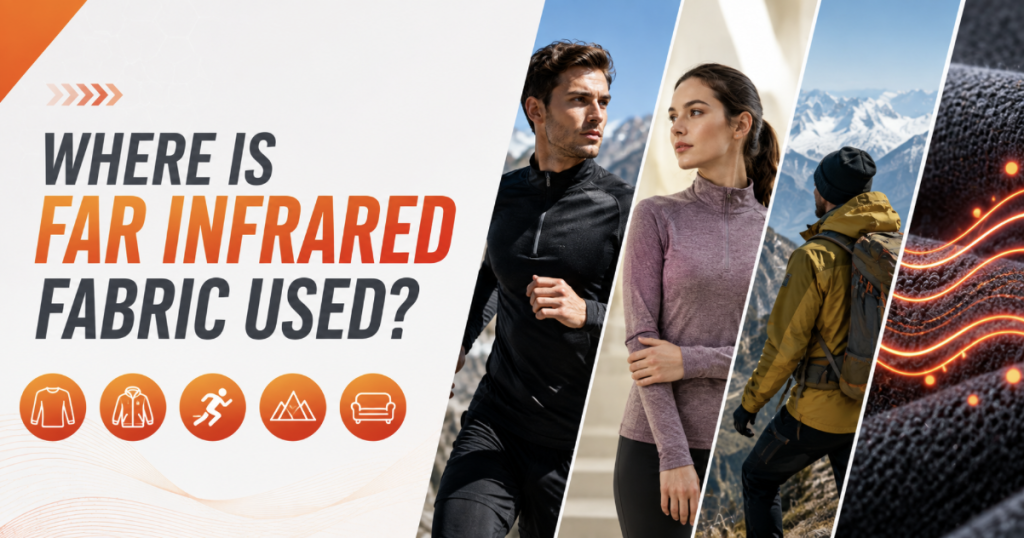
Because far infrared technology can be integrated into different fibers and fabric structures, far infrared fabricis suitable for a wide range of applications.
Sports and Activewear
FIR textiles are commonly used in base layers, leggings, compression wear, and training apparel where stretch, moisture management, and thermal comfort are important.
Outdoor Apparel
They can also be applied to performance layers, socks, gloves, jackets, and other cold-weather garments.
Recovery and Comfort Apparel
Far infrared fabrics are used in recovery wear, sleepwear, and comfort-focused clothing.
Home Textiles
Applications also include blankets, bedding, and mattress fabrics.
For textile brands, the ideal fabric specification depends on the end use, including fiber composition, GSM, stretch, breathability, moisture management, wash durability, hand feel, and overall fabric construction.
Which Fabric Is Right for Your Product?
Choosing betweenfar infrared fabric and traditional thermal fabric depends on the performance requirements of the final product. Far infrared fabric is ideal for applications that require lightweight construction, FIR functionality, thermal comfort, and differentiation from conventional materials, while traditional thermal fabrics may be better suited for products focused primarily on insulation and cold-weather protection.
In some applications, the two technologies can also be combined to deliver both insulation and functional FIR performance. Beyond the technology itself, factors such as fiber composition, fabric weight, breathability, stretch, moisture management, wash durability, and end-use requirements should all be considered when selecting the right textile solution.
Far Infrared Fabric Solutions from Sportingtex
Sportingtex provides functional far infrared fabric solutions for activewear, outdoor apparel, base layers, and performance garments. Our team helps brands develop fabrics that balance comfort, durability, breathability, and performance for specific applications.
Looking for the right FIR fabric? Contact Sportingtex to discuss your next textile development project.
Far Infrared Fabric FAQ
Q1. What Is Far Infrared Fabric?
Far infrared fabric is a functional textile containing FIR-active materials designed to interact with thermal energy and emit far infrared radiation.
Q2. Is Far Infrared Fabric the Same as Thermal Fabric?
No. Traditional thermal fabric mainly reduces heat loss through insulation, while far infrared fabric uses FIR-active materials that interact with thermal energy.
Q3. Does Far Infrared Fabric Generate Heat?
Far infrared fabric does not generate heat like an electrically heated textile. Instead, it interacts with existing thermal energy and emits part of that energy as far infrared radiation.