
Breathability is one of the most important considerations when selecting fabric for sportswear, outdoor clothing, and everyday apparel. Yet a fabric labeled “breathable” does not always provide the same level of comfort in every situation. Fiber choice, fabric construction, and finishing treatments all affect how heat and moisture move through a garment.
So, what is breathability in fabric, and how can apparel brands choose the right material? This guide explains the basics, common testing methods, and practical steps for selecting breathable performance textiles.
What Is Breathability in Fabric?
Fabric breathability describes how readily air or water vapor can move through a textile. It influences how a garment manages heat and perspiration, especially during exercise or in warm conditions.
Two properties are particularly important:
- Air permeability: How easily air passes through a fabric. An open knit or mesh may allow more direct airflow, helping the wearer feel cooler when air is moving.
- Water vapor permeability: How readily moisture vapor passes through a material. This matters when sweat evaporates from the skin and needs to escape through clothing.
These properties are related but are not interchangeable. A tightly constructed fabric with a suitable membrane may allow moisture vapor to pass while blocking most airflow. Meanwhile, a highly air-permeable fabric may offer little protection against wind or rain.
For apparel developers, the goal is not simply to choose the material with the highest breathability value. It is to match the fabric’s performance to the activity, climate, garment design, and wearer’s needs.
Explore More:Why Do Clothes Feel Sticky in Summer? How Cooling Fabric Helps You Stay Cool and Dry
What Factors Affect Fabric Breathability?
Fiber Type and Material
Cotton absorbs moisture and can feel comfortable in casual clothing, but it may remain wet during intense activity. Polyester and nylon absorb less water into the fibers and can be engineered for moisture management. However, fiber content alone cannot determine whether a finished fabric is breathable.
Fabric Construction and Density
Fabric structure often makes a major difference. Open knits and mesh generally provide more airflow than tightly woven fabrics. Yarn size, knit pattern, weave density, and fabric weight also influence air passage. Two polyester fabrics with different constructions can perform very differently.
Moisture Management and Wicking
Breathability is often confused with moisture-wicking. Wicking moves liquid sweat across or away from the skin-facing surface, while vapor permeability describes the movement of water vapor through material.
A fabric can perform well in one area but poorly in another. For activewear, both properties may matter.
Coatings, Finishes, and Membranes
Water-resistant finishes, coatings, and waterproof membranes can change airflow and vapor transmission. Some membrane systems block liquid water while permitting water vapor to pass. Others may reduce overall ventilation.
Any performance claim should be checked on the finished fabric, not assumed from the fiber or treatment alone.
How Is Fabric Breathability Measured?
Breathability should be supported by test data rather than product descriptions alone. The most useful measurement depends on what the garment is expected to do.
Test or Metric | What It Measures | How to Read the Result |
Air Permeability | Air moving through fabric under a specified pressure difference | Higher values mean more airflow under comparable conditions. |
MVTR / WVTR | Water vapor passing through material over time | Higher values generally mean more vapor transmission under the same conditions. |
RET | Resistance to water vapor transfer | Lower values indicate less resistance to moisture evaporation. |
Common Testing Standards
ASTM D737 measures the air permeability of textile fabrics. It is useful when airflow is important, such as for ventilation panels or lightweight apparel.
ASTM E96/E96M measures water vapor transmission through materials. Results may be reported in grams per square meter per day (g/m²/24 h), depending on the reporting setup.
ISO 11092 uses a sweating guarded-hotplate method to measure thermal and water-vapor resistance, helping assess heat and moisture transfer through fabrics or layered assemblies.
A high MVTR number is not automatically proof that one fabric will feel more comfortable than another. Testing temperature, humidity, method, and fabric configuration can affect results.
Ask suppliers for the standard used, test conditions, units, and reports before comparing materials.
For products that must manage liquid sweat, consider separate moisture-management tests, such as AATCC TM195, rather than treating vapor transmission as a substitute for wicking performance.
How to Choose Breathable Performance Textiles for Different Applications
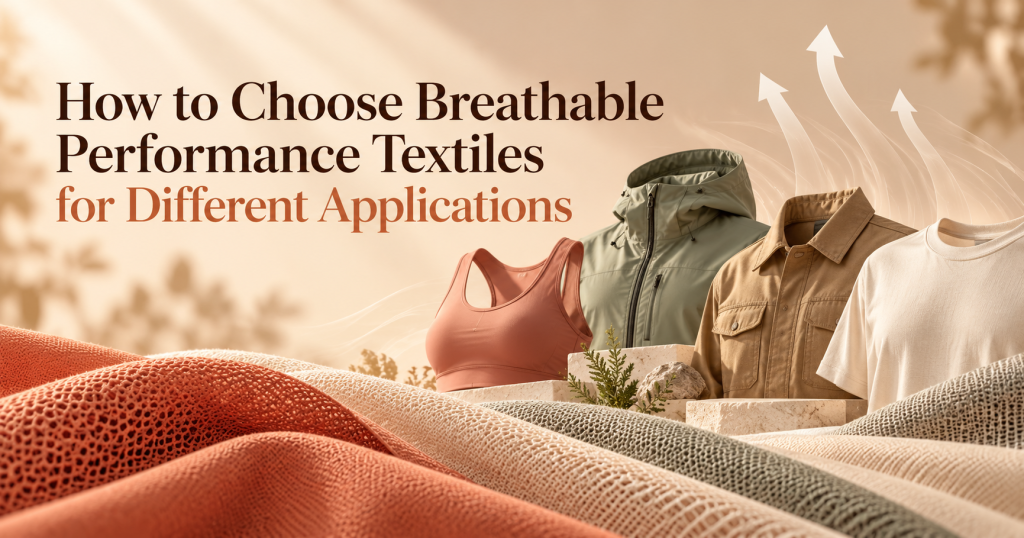
The best breathable fabric depends on the end use. Start with the wearer’s activity and environment, then balance breathability with other required features.
Sportswear and Activewear
For running tops, training shirts, and leggings, look at moisture management, stretch, drying behavior, and airflow. Lightweight knit fabrics and strategically placed mesh can improve ventilation. Review how the material feels when damp, not just when dry.
Outdoor Jackets
For hiking or rain jackets, airflow is only part of the decision. Weather protection and water vapor transmission are often more important than maximum air permeability.
Evaluate membranes, seam construction, layering, and intended activity level. A breathable waterproof fabric can still feel humid during heavy exertion.
Workwear and Uniforms
Uniform fabrics often need to balance comfort with durability, abrasion resistance, and ease of care.
Consider climate, daily movement, required protection, and repeated washing. For workers in warm settings, adequate ventilation may be a key design requirement.
Everyday Apparel
For shirts, dresses, and casual trousers, softness, fabric weight, drape, and care requirements may matter as much as technical measurements.
Cotton blends, selected knits, and lightweight woven fabrics can be considered depending on the desired feel and performance.
Three Steps for Fabric Buyers
- Define the application.
Identify the target climate, activity intensity, expected sweat level, and whether the garment requires wind or water resistance.
- Request comparable specifications.
Ask for fiber content, fabric construction, weight in GSM, finishes, and breathability test results. Compare data obtained with the same method and conditions whenever possible.
- Evaluate samples in realistic use.
Check stretch, hand feel, drying, care performance, and comfort in a prototype garment. Testing a fabric swatch is valuable, but fit, lining, and ventilation details also affect the finished product.
Working with a fabric manufacturer early can help you identify construction and finishing options that meet your performance and cost targets.
Planning a new apparel collection? Contact our team to discuss breathable fabric options, technical specifications, and sample development.
Breathable Performance Fabric Solutions from Sportingtex
Sportingtex provides breathable performance fabric solutions for sportswear, outdoor apparel, activewear, and everyday clothing. Our team helps brands develop functional textiles that balance breathability, moisture management, comfort, and durability for different applications.
Looking for the right breathable fabric? Contact Sportingtex to discuss your next textile development project.
Fabric Breathability FAQs
Q1: What Is the Most Breathable Fabric for Clothing?
There is no single most breathable fabric for every use. Lightweight mesh and open knits often allow strong airflow, while other materials are designed to manage moisture vapor. Fiber type, construction, fabric weight, and treatments should all be considered together.
Q2: Is Breathable Fabric the Same as Moisture-Wicking Fabric?
No. Breathability concerns air and/or moisture vapor moving through fabric. Moisture-wicking describes the movement of liquid sweat along or through the fabric structure. Both can improve comfort, but they measure different properties and should be evaluated separately.
Q3: Can Waterproof Fabrics Also Be Breathable?
Yes. Some waterproof membranes block liquid water while allowing moisture vapor to pass. However, breathable does not mean unrestricted airflow, and performance depends on the membrane system, garment construction, weather, and activity level. Check relevant test results before selecting a material.