
Cooling fabric and moisture-wicking fabric are commonly used in sportswear, outdoor apparel, and performance clothing. Both help improve comfort in warm conditions, but they work in different ways.
Cooling fabrics focus on heat management or creating a cooling sensation, while moisture-wicking fabrics move sweat away from the skin. Some performance textiles combine both functions.
Understanding the differences between cooling fabric vs. moisture-wicking fabric can help apparel brands choose the right materials for their products.
What Are Cooling and Moisture-Wicking Fabrics?
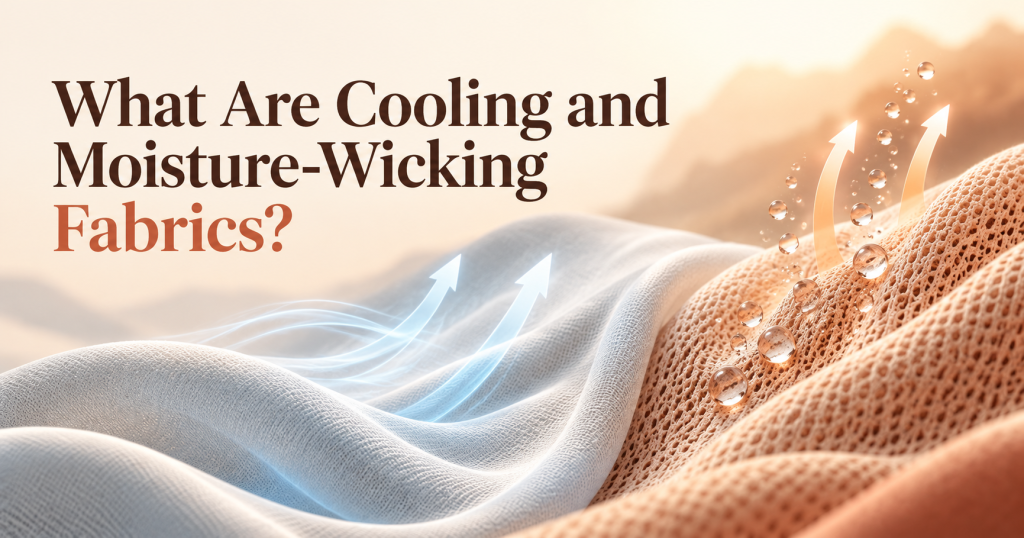
What Is Cooling Fabric?
Cooling fabric is a functional textile designed to create a cooling sensation or help manage heat during wear.
Depending on the material and technology, cooling fabrics may work through different mechanisms:
- Cool-to-the-Touch: Fabrics that transfer heat quickly from the skin, creating an immediate cool feeling.
- Evaporative Cooling: Materials that support heat loss as moisture evaporates.
- Heat Management: Fabric constructions or technologies designed to influence heat transfer and thermal comfort.
Some cooling fabrics feel cool immediately upon contact, while others depend on moisture, airflow, or surrounding conditions.
What Is Moisture-Wicking Fabric?
Moisture-wicking fabric is designed to move liquid sweat away from the skin and spread it through the fabric.
This process typically relies on capillary action, which allows moisture to travel through spaces between fibers and yarns.
Moisture-wicking fabrics are widely used in activewear, base layers, and training clothing because they help manage perspiration during physical activity.
However, moisture-wicking does not automatically mean a fabric feels cool to the touch.
Explore More:Why Do Clothes Feel Sticky in Summer? How Cooling Fabric Helps You Stay Cool and Dry
Cooling Fabric vs. Moisture-Wicking Fabric: Key Differences
The main difference between cooling and moisture-wicking fabrics is how they manage heat and moisture.
Cooling fabrics focus on thermal comfort, while moisture-wicking fabrics focus on liquid sweat movement.
|
Feature |
Cooling Fabric |
Moisture-Wicking Fabric |
|
Main Function |
Heat management or cooling sensation |
Moves sweat away from the skin |
|
How It Works |
Heat transfer or evaporative cooling |
Capillary action and moisture spreading |
|
Main Benefit |
Improved thermal comfort |
Sweat management |
|
Key Performance |
Cool-touch or cooling behavior |
Wicking and moisture transport |
|
Common Uses |
Summer apparel, activewear |
Sportswear, base layers |
Can a Fabric Provide Both Functions?
Yes. A fabric can provide both cooling and moisture-wicking properties.
For example, a textile may combine a cool-touch surface with a knit construction that supports sweat movement.
However, the two functions should be evaluated separately. A fabric with strong moisture-wicking performance may not provide an immediate cooling sensation, while a cool-touch fabric may have limited sweat management.
The best choice depends on the garment’s intended use, activity level, and wearing conditions.
How to Choose Cooling or Moisture-Wicking Fabrics for Different Applications
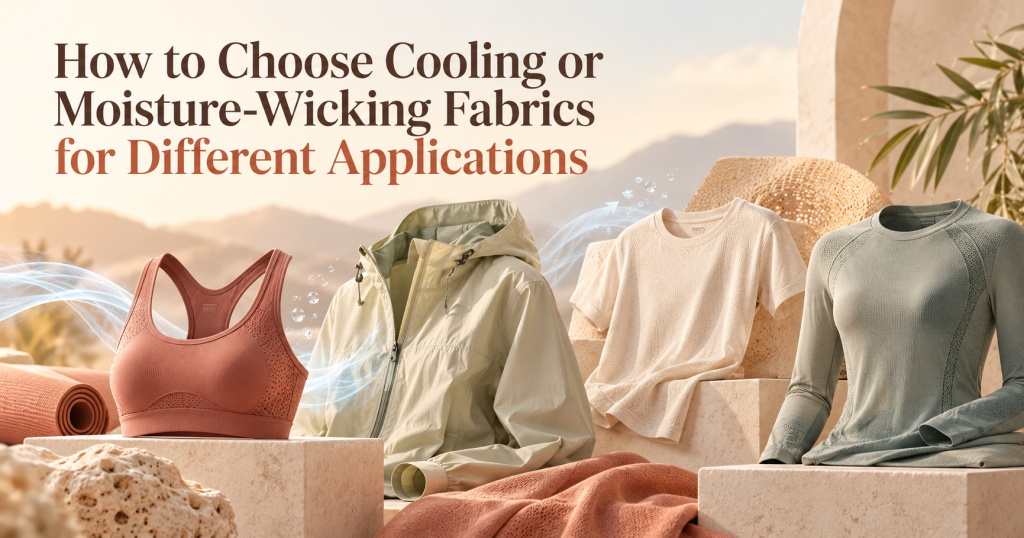
Choosing the right performance fabric starts with understanding how the finished garment will be used.
Sportswear and Activewear
Running shirts, training tops, and fitness apparel often need effective moisture management during intense activity.
Moisture-wicking fabrics can help move sweat away from the skin, while cooling features may provide additional comfort.
Brands should also consider stretch, breathability, drying behavior, and durability when selecting activewear fabrics.
Outdoor Clothing
Outdoor apparel needs to perform under changing temperatures, humidity, and activity levels.
Moisture-wicking properties are useful for hiking shirts and base layers, while certain cooling fabrics may improve comfort in warm conditions.
For outdoor jackets, additional requirements such as wind resistance, water protection, and vapor permeability may be more important.
Summer and Everyday Apparel
Summer clothing often prioritizes lightweight comfort and a pleasant feel against the skin.
Cool-touch fabrics can provide an immediate cooling sensation, while breathable constructions help support ventilation.
For everyday apparel, brands should also evaluate softness, drape, fabric weight, and care requirements.
Base Layers and Performance Uniforms
Base layers and work uniforms are frequently worn for extended periods.
Moisture-wicking properties can help manage perspiration, particularly in warm working environments.
Fabric durability, repeated washing, and long-term comfort are also important considerations.
Three Things Fabric Buyers Should Check
- Define the main performance goal.
Decide whether the product needs cool-touch comfort, sweat management, faster drying, or a combination of these features.
- Review fabric specifications and test results.
Compare fiber content, fabric construction, GSM, finishing treatments, and relevant performance data.
- Test samples in real conditions.
Evaluate fabric comfort, moisture behavior, and performance after washing. A fabric’s laboratory results may not fully represent its performance in a finished garment.
Selecting the right textile requires balancing performance, comfort, durability, and production requirements.
Cooling and Moisture-Wicking Fabric Solutions from Sportingtex
Sportingtex provides cooling and moisture-wicking fabric solutions for sportswear, activewear, outdoor apparel, and performance clothing. Our team helps brands develop functional textiles that balance cooling comfort, moisture management, breathability, and durability for different applications.
Looking for the right cooling or moisture-wicking fabric?
Contact Sportingtex to discuss your next textile development project.
Cooling and Moisture-Wicking Fabrics FAQs
Q1: Does Moisture-Wicking Fabric Keep You Cool?
Moisture-wicking fabric can support comfort by moving sweat away from the skin and helping moisture spread for evaporation. However, it does not automatically create a cool-touch sensation. Its cooling effect depends on airflow, humidity, fabric construction, and how effectively moisture evaporates.
Q2: Can Fabric Be Both Cooling and Moisture-Wicking?
Yes. Some performance textiles combine cooling and moisture-wicking properties through fiber selection, fabric construction, and functional finishes. These fabrics may provide both a cooling sensation and improved sweat management. Each function should be tested separately to confirm its performance.
Q3: Which Is Better for Sportswear: Cooling or Moisture-Wicking Fabric?
Moisture-wicking fabric is often important for high-intensity sports because it helps manage sweat. Cooling fabrics may offer additional comfort in warm conditions. For many sportswear applications, combining moisture management, breathability, and cooling features can provide a more suitable solution.