
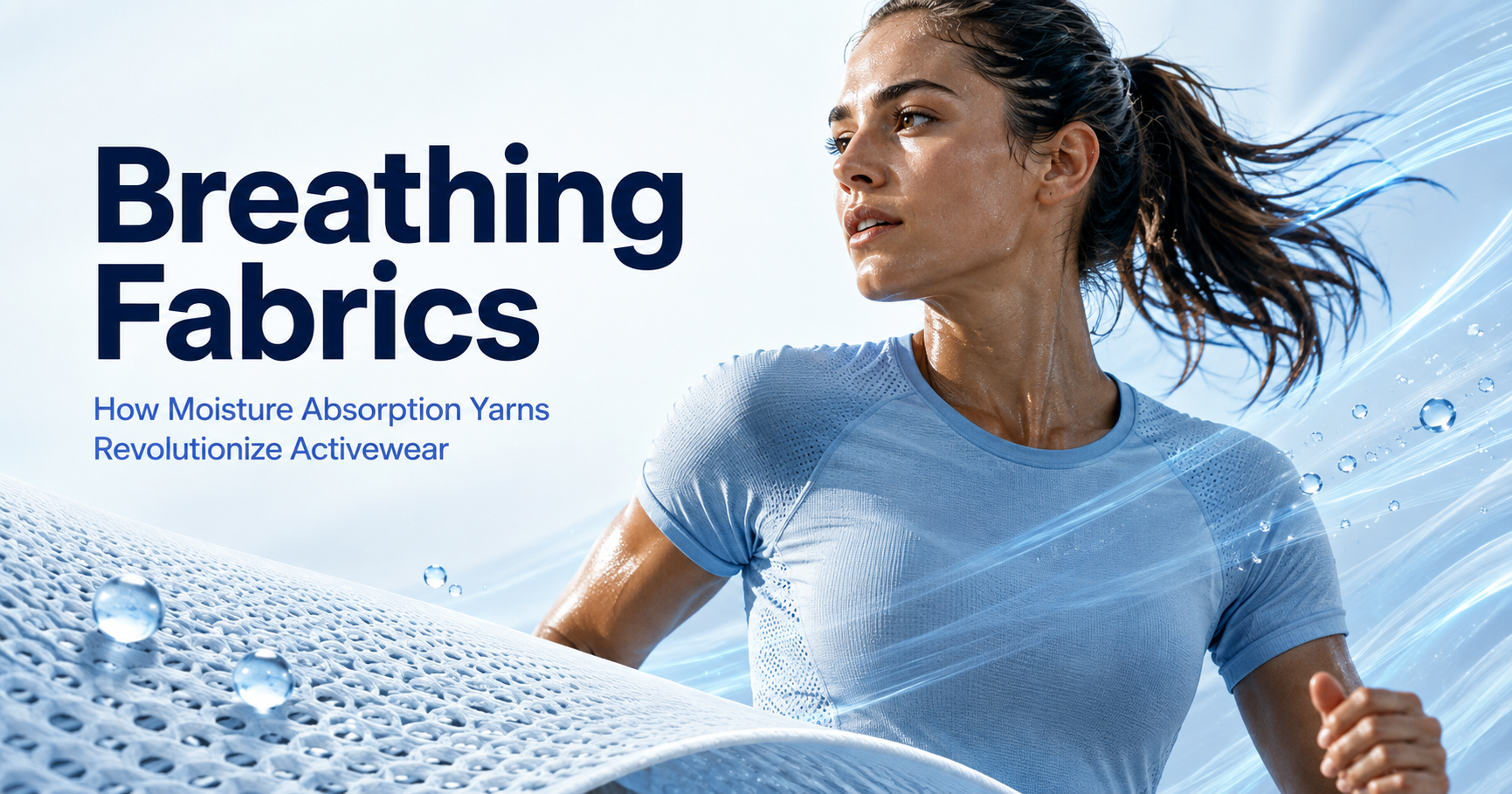
Modern activewear needs more than ventilation—it needs fabrics that respond to the body. As athletes move and sweat, textiles must manage changing heat and moisture efficiently. Moisture absorption yarnshelp redefine breathability by drawing moisture away from the skin, spreading it through the fabric, and supporting faster evaporation. By integrating moisture-responsive performance directly into the fiber, these functional yarnshelp activewear stay drier, cooler, and more comfortable during exercise and changing environmental conditions, while improving overall comfort and wearing performance.
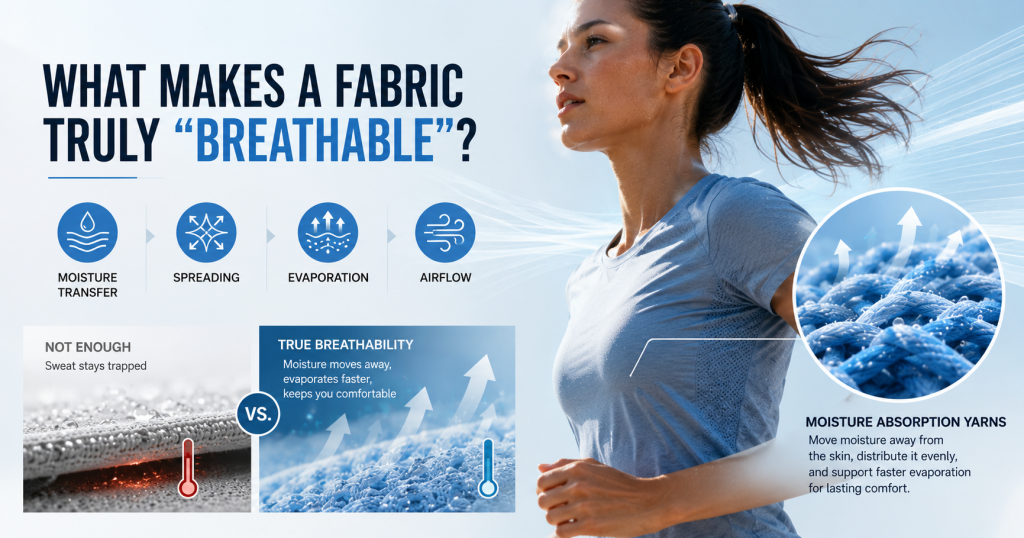
What Makes a Fabric Truly “Breathable”?
Breathability is more than airflow. When sweat stays trapped against the skin, activewear can feel sticky, heavy, and overheated—even if air can pass through the fabric. True breathability requires moisture transfer, spreading, evaporation, and airflow to work together.
Quick-dry performance alone may not prevent uneven wet areas or discomfort. Effective moisture management depends on fiber chemistry, yarn structure, and fabric construction.
Moisture absorption yarnshelp move moisture away from the skin, distribute it more evenly, and support faster evaporation, creating a drier and more comfortable wearing experience during activity.
From Moisture Absorption to Moisture Management
Sweating helps regulate body temperature, but when moisture builds up faster than fabric can release it, activewear can feel sticky, heavy, and uncomfortable. Trapped sweat may also increase friction and make heat harder to escape.
Advanced moisture absorption yarns help manage this moisture cycle in stages. Sweat is drawn away from the skin, transported through the yarn structure, and spread across a wider fabric surface to support faster evaporation.
This process helps reduce moisture buildup, uneven wet areas, and the damp sensation often experienced during intense activity. Some moisture-responsive fibers may also react as humidity rises, creating subtle structural changes that support airflow before returning toward their original state as the fabric dries.
The result is a more adaptive textile system that supports dryness, airflow, and comfort throughout workouts, recovery, and changing environmental conditions.
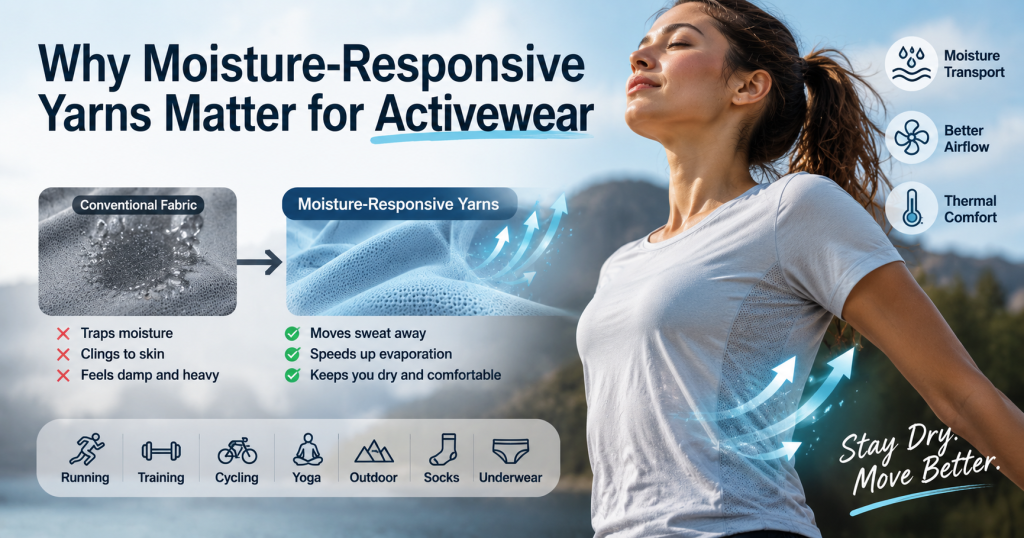
Why Moisture-Responsive Yarns Matter for Activewear
Activewear must perform across rapidly changing conditions. During exercise, body temperature and sweat levels rise, while recovery can leave wearers feeling cold, damp, and uncomfortable. Conventional fabrics may trap moisture, cling to the skin, and struggle to maintain comfort as activity levels change.
Moisture-responsive yarnshelp create a more adaptive microclimate between the body and garment. During intense movement, they support moisture transport and airflow to release excess heat and sweat. During recovery, faster evaporation can reduce the heavy, sticky, and chilled sensation caused by damp fabric.
This performance is especially valuable for running tops, training shirts, cycling wear, yoga apparel, base layers, outdoor clothing, socks, and performance underwear. For activewear brands, moisture-responsive yarns offer a practical way to design garments around real physiological needs—supporting dryness, airflow, thermal comfort, and a better wearing experience throughout workouts, recovery, travel, outdoor activity, and everyday movement across changing temperatures and humidity levels.
Comfort Beyond Quick Drying
Quick-dry performance is important, but comfort requires more than fast drying. If sweat remains concentrated, activewear can still feel damp, sticky, and heavy.
A well-designed moisture management textile helps spread moisture, support faster evaporation, improve airflow, and reduce heat buildup. Engineered yarn structures can also maintain a soft, comfortable feel during movement.
The result is a fabric that manages moisture, heat, and airflow together—helping activewear stay drier, lighter, and more comfortable during workouts, travel, commuting, and everyday use
Explore More:Why Do Clothes Feel Sticky in Summer? How Cooling Fabric Helps You Stay Cool and Dry
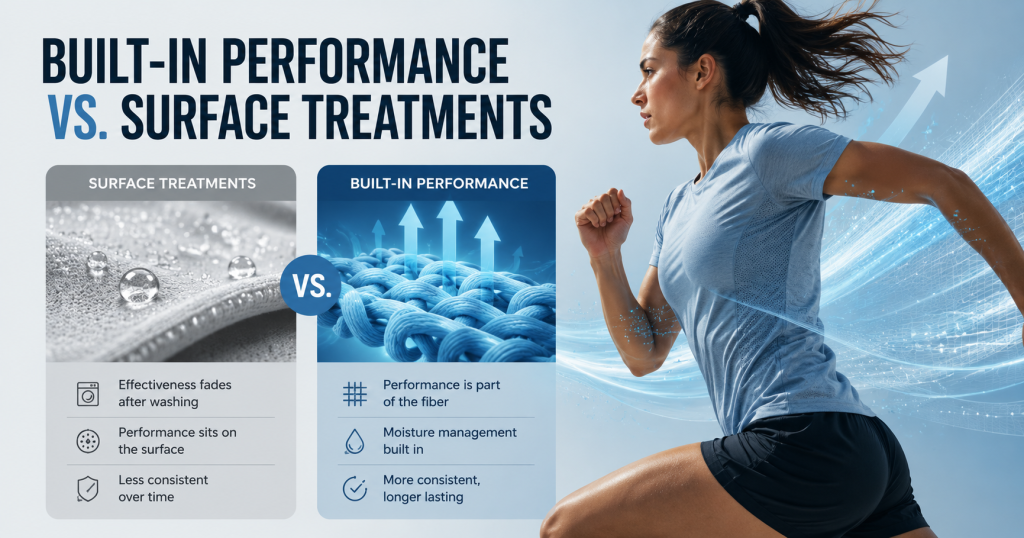
Built-In Performance vs. Surface Treatments
Traditional performance fabrics often rely on surface treatments, which may gradually lose effectiveness after repeated washing and wear.
By engineeringmoisture management directly into the fiber or yarn structure, performance becomes part of the material itself. This can provide more consistent functionality while reducing reliance on additional finishes.
For textile developers, built-in performance also offers greater design flexibility. Yarn structure can work with knit construction, fabric density, and ventilation zones to create targeted moisture control, airflow, and comfort for different activewear applications.
Smarter Performance for the Future of Breathing Fabrics
Performance and sustainability are increasingly connected through smarter fiber design. By engineering moisture management directly into yarns, brands can reduce reliance on complex material combinations and short-lived surface treatments while supporting more durable performance.
At the same time, activewear is moving toward more responsive textiles. Advanced moisture absorption yarns help draw sweat away from the skin, spread moisture across the fabric, support faster evaporation, and improve airflow as activity levels change.
For activewear brands and textile developers, this creates an opportunity to combine functionality, comfort, durability, and more responsible material choices. The future of breathing fabrics lies in textiles that respond more naturally to the body and deliver reliable performance across workouts, recovery, travel, and everyday active use.
Conclusion: Smarter Breathing Fabric Solutions from Sportingtex
Sportingtex develops high-performance breathing fabrics with advanced moisture absorption, moisture management, quick-dry, airflow, and comfort features. These fabrics are ideal for activewear, running apparel, training wear, outdoor clothing, base layers, and other performance applications.
By combining functional yarns with engineered fabric structures, Sportingtex helps apparel brands create garments that move moisture away from the skin, support faster evaporation, reduce heat and dampness, and stay lighter and more comfortable during movement.
Looking for the right moisture management fabricfor your next activewear collection? Click here to contact Sportingtex for a consultation.
Moisture Absorption Yarns FAQ
1. What Are Moisture Absorption Yarns?
Moisture absorption yarns help move sweat away from the skin, spread moisture across the fabric, and support faster evaporation. This keeps activewear drier, lighter, and more comfortable during movement.
2. How Do Moisture Absorption Yarns Improve Activewear Performance?
Moisture absorption yarnshelp activewear manage sweat, improve evaporation and airflow, and support thermal comfort. By reducing moisture buildup, they keep garments lighter, drier, and more comfortable during workouts and recovery.
3. What Types of Activewear Benefit Most from Moisture Management Fabrics?
Moisture management fabricsare ideal for activewear exposed to sweat and heat, including running, training, cycling, yoga, outdoor apparel, socks, and base layers. They are especially useful for prolonged activity, warm climates, and changing conditions.